Buying & selling online
Vinted Scams: Is Vinted Legit and How to Stay Safe
Vinted scams explained: is Vinted legit, how Buyer Protection works, the red flags for buyers and sellers, and what to do if you've been scammed.
Yes, Vinted is a legitimate marketplace, and most Vinted scams follow one pattern: someone tries to get you out of the app. A buyer sends a link to "confirm payment," a seller asks for Zelle or PayPal Friends and Family, or a text threatens to lock your account. If you pay with the Buy now button and keep every message on Vinted, its Buyer Protection covers you.
So can you get scammed on Vinted? You can, mostly through payments outside the platform, fake payment pages, counterfeit designer items and disputes over empty boxes. At TrustCamera we build a camera app that gives photos and videos a check code at the moment they're taken, so we pay close attention to what counts as evidence when a sale goes wrong. Below you'll find the red flags, how Buyer Protection works according to Vinted's help center, and what to do if it happens to you.
Vinted scams at a glance: the red flags to watch for
The clearest sign of a Vinted scam is pressure to leave the app. Genuine buyers and sellers chat on Vinted and pay with the Buy now button. Anyone who wants another payment method, your email or a click on an outside link is usually trying to dodge Buyer Protection. Rushed deadlines and too-good prices are the other warning signs.
- Paying outside Vinted: Zelle, Venmo, a bank transfer or PayPal Friends and Family instead of Buy now.
- Links and QR codes in chat: You supposedly need to confirm a payment, verify your account or "unlock" your money.
- Requests for contact details: Someone wants your email or phone number to "keep talking" somewhere else.
- Pressure: A message threatens a suspension, a canceled order or a link that's about to expire.
- Deals that are too good: Designer items far below their usual resale price, often with photos that look like a catalog.
Many of these tricks aren't unique to Vinted. Our guide to Facebook Marketplace scams covers the same patterns as they play out on Facebook. What sets Vinted apart is that payment and shipping are built into the app, so any attempt to route around them is a red flag on its own.
Is Vinted legit? Who runs it and where the risks are
Yes, Vinted is legit. It's run by Vinted Group, a company based in Vilnius, Lithuania. According to its 2025 annual results, members traded €10.8 billion worth of goods on the platform that year, and the company reported €1.1 billion in revenue and €62 million in net profit. That's not the profile of a fly-by-night site.
Vinted describes itself as Europe's leading platform for buying and selling secondhand clothing, and it launched in the US in January 2026, starting with New York. Because the US launch is recent, some American profiles may not have many reviews yet. That alone isn't a red flag, but it means the payment method matters even more than the star rating.
The risk, then, isn't the platform itself. Vinted scams happen between individual members and through criminals who pose as Vinted. We haven't found official figures on how often Vinted users get scammed. The Vinted scams below are the ones Vinted's own help center warns about. In our view, they fall into three groups: payments that bypass Vinted, fake messages and websites in Vinted's design, and disputes about what was really in the box.
How Vinted Buyer Protection works
Buyer Protection only applies when you pay through Vinted with the Buy now button. In that case, Vinted says it can refund you if your item doesn't arrive, arrives damaged or is significantly not as described. A Buyer Protection fee is mandatory on every order and is added automatically at checkout.
The window to complain is short. According to Vinted's Buyer Protection page, you have 2 days after your item is marked as delivered to press the "I have an issue" button. If you miss that window or tap "Everything is OK," the order is completed and your payment goes to the seller automatically. Open your parcels soon after they arrive for that reason.
For sellers, the flip side is that you get paid once the buyer confirms the order or the window closes, not before. Vinted's help center also recommends checking a seller's profile, verified info, star rating and reviews before you buy. Put simply, Vinted Buyer Protection is strong inside the app and nonexistent outside it, which is why the first scam on this list matters most.
Scam 1: Being asked to pay outside Vinted
A classic Vinted scam starts with a friendly suggestion: pay directly on Zelle and skip the Buyer Protection fee. Or the seller asks for PayPal Friends and Family, a bank transfer, or wants to continue over email or WhatsApp. It sounds harmless. In our view, it's the single most important red flag on the platform.
Vinted is explicit about this. Its guide on how to shop and pay safely says that if you pay outside Vinted's system, without using the Buy now button, you won't be covered by Buyer Protection, and Vinted won't be able to support you. If the item never ships, you've lost the easiest way to get your money back.
PayPal Friends and Family is meant for sending money to people you know, not for paying strangers for goods. Our guide to the PayPal Friends and Family scam explains why that leaves buyers exposed. With Zelle, Venmo or a bank transfer, Vinted can't step in either, and whether you ever see the money again depends on your bank or payment app.
Which payment methods are safer for private sales in general is covered in our guide to the safest way to pay on Facebook Marketplace. On Vinted the answer is simpler: pay with Buy now, every time.
Scam 2: Vinted phishing emails, texts and fake payment pages
In a phishing scam, criminals pose as Vinted to steal your login, bank or card details. Vinted's guide to phishing messages lists the channels: messages inside Vinted, texts to your phone, emails and QR codes. It also shows real examples that members received. Among them are chat messages asking them to email information, open a link or scan a QR code. Others are fake emails that ask members to confirm a sale through a link, or fake Vinted websites asking for payment details.
One version targets sellers and usually goes like this: a "buyer" is eager to purchase and soon says they've already paid. To receive the money, all you need to do is verify your account through a link or QR code. The page behind it looks like Vinted but asks for your card details or a one-time code sent to your phone.
Vinted states the rule that beats this scam itself: you don't have to leave Vinted to confirm a payment or receive an order. So check whether someone really bought your item in the app, never through a link in a message.
According to Vinted's help center, its emails come from an address ending in your country's Vinted domain, such as @vinted.com in the US or @vinted.co.uk in the UK. Official in-app updates come from a Vinted account with a special badge next to its name. You'll also see a pop-up warning before a chat link takes you out of the app.
More tricks aimed at sellers, such as fake payment emails and overpayment stories, are covered in our guide to Facebook Marketplace seller scams. The patterns are strikingly similar across platforms.
Scam 3: Counterfeits and stolen listing photos
A lot of brand-name clothing changes hands on Vinted, and that attracts counterfeiters. Many Vinted scams in this category can be spotted before you pay. Warning signs include a price far below the usual resale value, many identical items in one closet and photos that look more like an ad campaign than a bedroom floor.
Ask the seller through Vinted chat for extra photos of details such as the care label, the inside seams or a serial number. That isn't proof, but someone who really owns the item can usually send them quickly. Our guide on how to tell if something is counterfeit lists more checks, from stitching and labels to serial numbers.
A reverse image search often shows within a few minutes whether listing photos came from an online store or another seller's profile. If the same picture turns up on a retailer's site or in an older listing, the seller probably didn't take it. Our guide on how to tell if a photo is real covers more checks for edited or AI-generated images.
If an item turns out to be fake after all, buying through Buy now protects you. According to Vinted, you don't even have to send back an item that's confirmed as counterfeit to get a refund. The same 2-day window after delivery applies, so check designer pieces as soon as they arrive.
Empty boxes and "not as described" claims: scams on both sides
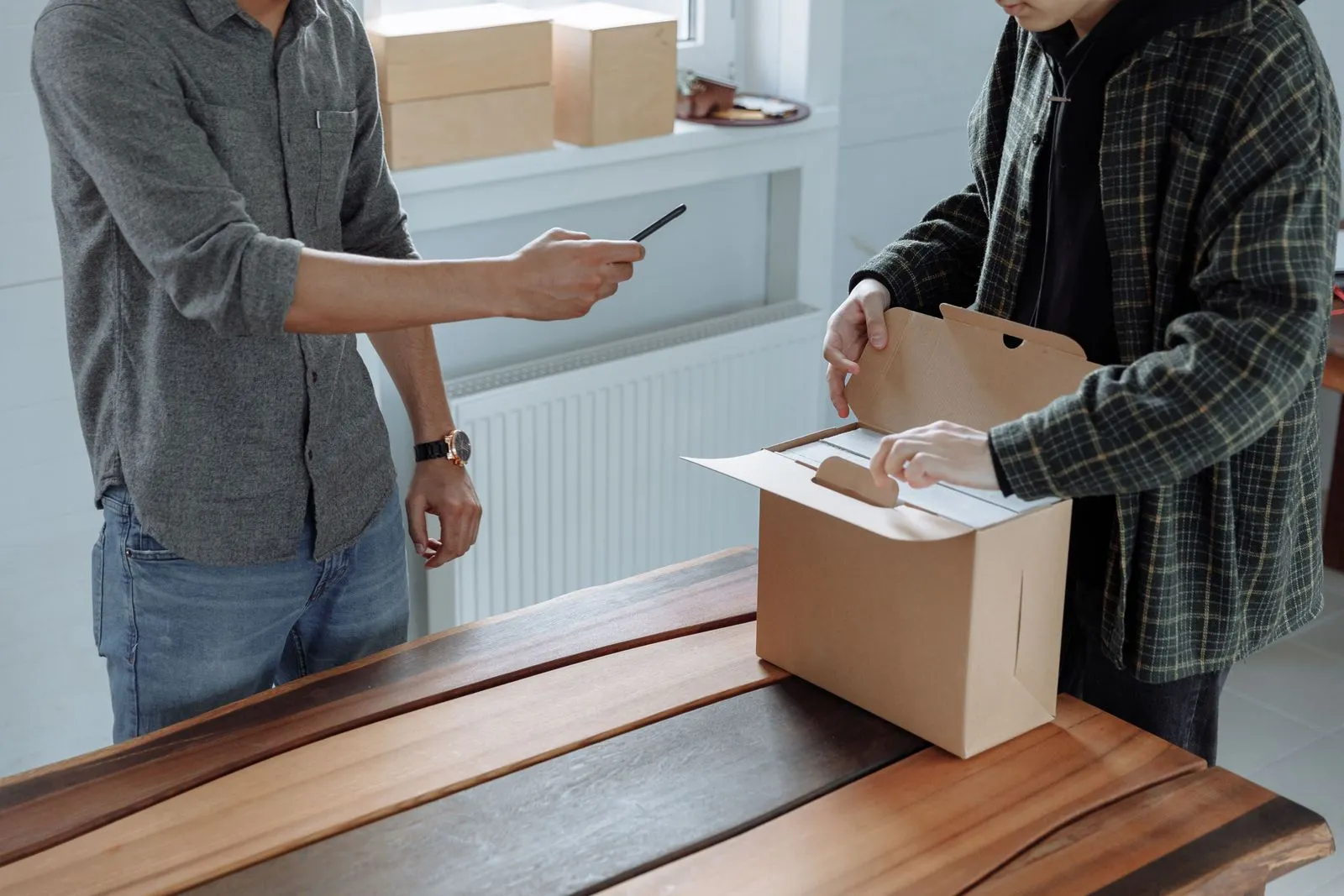
Not every Vinted scam involves a link. Sometimes the question is what was really in the parcel. A buyer reports that the box was empty or held a different item. Or a seller really does ship something other than what the listing showed. Either side can cheat, and either side can end up wrongly suspected.
Here's how a claim works under Vinted's refund policy. After you request a refund, the order is suspended and your payment is held until the issue is resolved. The seller can offer a full or partial refund and let you keep the item, or ask for a return. A return must be shipped within 5 business days of the seller's request, or your claim can be rejected. The policy says buyers pay for return shipping, though sellers can cover it by providing a Vinted-generated label.
Evidence decides these cases. The same policy asks for photos of the item and the problem, the outer and inner packaging, and any visible damage to the box. Vinted recommends keeping the packaging until the claim is resolved and says that without extra photos, it may not be able to issue a refund. If the item arrived broken rather than missing, our guide on what to do when a package arrived damaged has a photo checklist for the box, the label and the contents.
If buyer and seller can't agree, the buyer can pass the case to Vinted support by pressing "View issue details" and then "Contact us" in the order chat. Vinted says it then reviews the case and all available details and decides what happens next. In our view, that's the moment when being able to back up your version counts. If you recorded nothing before shipping or while unpacking, you have little to show.
Is selling on Vinted safe? Document packing and unboxing
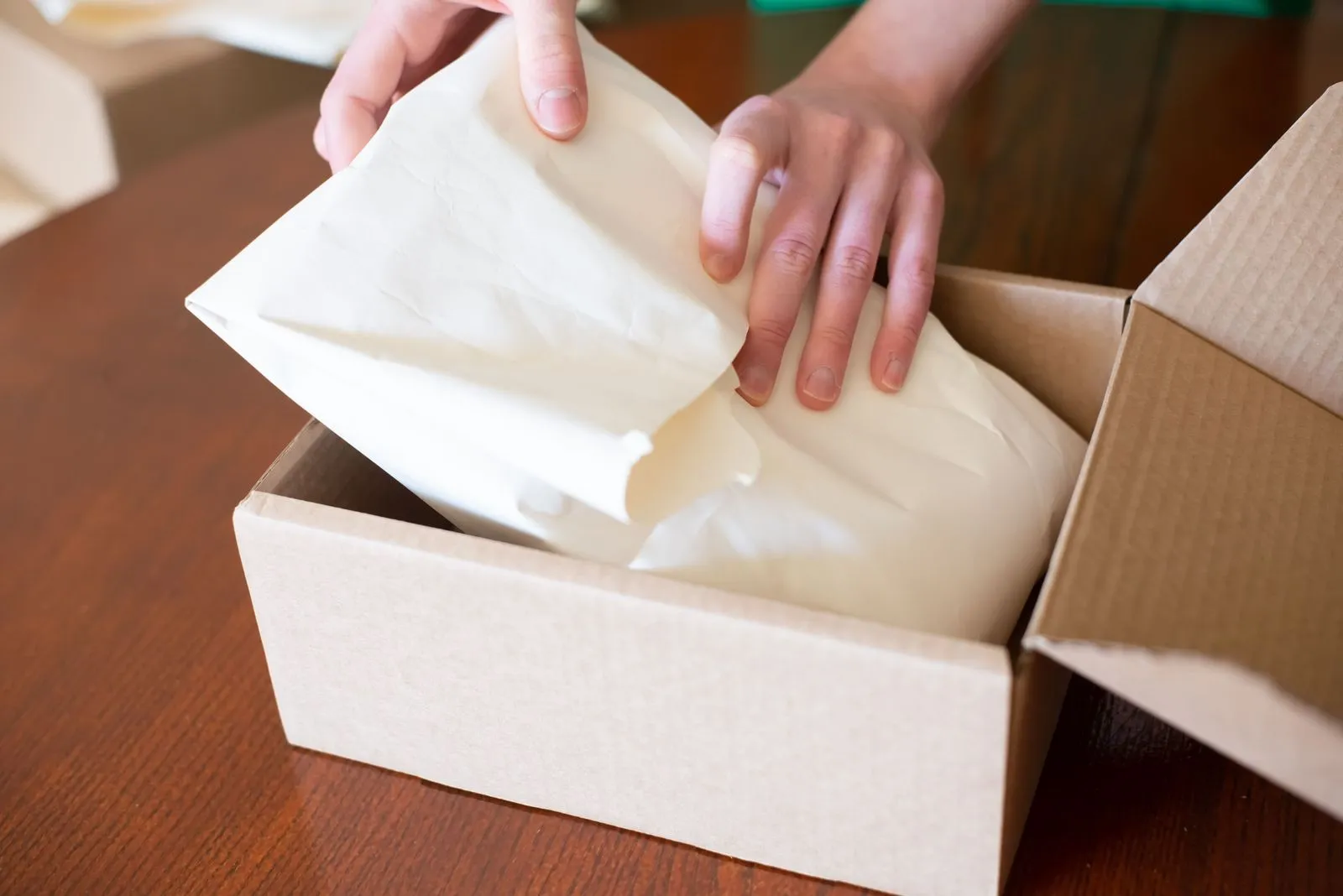
Selling on Vinted is generally safe as long as the buyer pays through Vinted, because the platform holds the money until the order is complete. The weak spot is the "empty box" dispute, where it's your word against theirs. Vinted's own packing guide recommends that sellers photograph the item and the packed parcel, inside and outside, before shipping. In our view, the same preparation pays off for buyers too, and it takes a minute or two:
- As a seller: Photograph the item from all sides right before packing, including labels and any flaws. Then film yourself packing it and sealing the box, with the shipping label in the frame.
- As a buyer: Photograph the sealed parcel with its label. Film the unboxing in one take until the item is fully visible.
- Both sides: Keep the packaging, the label and the drop-off receipt until the order is complete.
Ordinary photos and videos have one weakness, though. The other side can claim they're older, show a different parcel or were edited. A file's metadata doesn't settle that either, because it's easy to change, as our guide on how to see photo metadata explains.
That's the problem we're building TrustCamera to solve. You take photos, or videos up to 20 seconds, directly in the app, and uploads from the gallery aren't possible. Every capture gets a check code. You share the code with the buyer or seller right after recording, and they should check it themselves straight away for free in their browser, without an account and without following a link from the chat. They see that the file hasn't changed since it was taken, along with the capture time and approximate location.
The limits matter too. Such proof can't show whether a scene was staged. Vinted decides for itself which evidence it considers in a claim, and you still upload the photos it asks for directly in the claim. TrustCamera for Android and iOS will be available soon.
What to do if you get scammed on Vinted
Some Vinted scams only become obvious after the money is gone. If you've lost money or entered your details on a fake page, act fast. Vinted's phishing guide and the FTC's advice on what to do if you were scammed point to these steps:
- Tell Vinted: Within the 2-day window, press "I have an issue" in the order chat. Otherwise, contact support through the help center. Forward phishing emails to [email protected] with screenshots, the member's username and any bank details you were asked to pay.
- Call your bank or payment app: Freeze cards or accounts if needed and ask them to reverse the payment.
- Change your passwords: Update your Vinted password and any account that uses the same one, and turn on two-factor authentication.
- Save the evidence: Take screenshots of the listing, profile, chat, emails and payment records before they disappear.
- Report it: In the US, file a report at ReportFraud.ftc.gov. Vinted also advises contacting your local police if money was taken from your bank account.
In the UK, the National Cyber Security Centre says to tell your bank straight away and report it to Report Fraud, the national reporting service that replaced Action Fraud. In Scotland, the NCSC points you to Police Scotland instead. For a step-by-step recovery plan, including what to include in a report, see our guide on what to do if you've been scammed on Facebook Marketplace. Most of the steps apply to Vinted too.
Frequently asked questions about Vinted scams
Is Vinted legit or a scam?
Vinted is legit. It's run by Vinted Group, based in Lithuania, which reported a profit for 2025 and launched in the US in January 2026. Scams happen between individual members or come from criminals posing as Vinted. If you pay with Buy now and keep all messages inside the app, Buyer Protection applies.
Can you get scammed on Vinted if you pay with Buy now?
It's possible, but you have a way out. If your item doesn't arrive, arrives damaged or is significantly not as described, report it within 2 days of delivery by pressing "I have an issue" in the order chat. Vinted holds the payment until the claim is resolved. If you miss the window, the money is released to the seller.
Is Vinted a safe site to buy from?
Yes, as long as you stay inside its system. Buyer Protection only covers purchases made with the Buy now button, and Vinted says it can't help with payments made outside the app. Check the seller's profile and reviews, be wary of designer items at rock-bottom prices, and never follow payment links sent in chat.
Why does a buyer want me to click a link to get paid?
Because it's a scam. According to Vinted, you never need to leave the app to confirm a payment or receive an order. A link or QR code that asks you to "verify" your account usually leads to a fake page built to steal your card or banking details. Check your sales directly in the Vinted app instead.
What should I do if my Vinted parcel was empty?
Photograph the parcel, the label and the packaging right away and press "I have an issue" within 2 days of delivery. Vinted asks for photos of the outer and inner packaging and any visible damage. Keep everything until the claim is resolved, and if you filmed the unboxing, include the video.
How do I recognize a real email from Vinted?
Vinted's help center says its emails come from an address ending in your country's Vinted domain, for example @vinted.com in the US or @vinted.co.uk in the UK. Look for small differences such as extra letters or numbers in the sender's address. When in doubt, don't click anything and check your account in the app instead. You can forward suspicious emails to [email protected].
Conclusion: most Vinted scams try to get you out of the app
Most Vinted scams share one goal: to pull you out of the protected system. Whether it's Zelle, Friends and Family, a link to "confirm" a sale or an email with a deadline, the pattern is the same. That's why one rule protects you best: pay, chat and confirm only inside the app.
Care covers the rest. Check profiles and photos, open parcels soon after delivery, and record packing and unboxing for anything worth more than a few dollars. A photo or video whose origin can be verified can turn your word against theirs into a case anyone can check. That's what we're working on with TrustCamera.
About the author

Co-founder & Marketing at TrustCamera
Yannick is a co-founder of TrustCamera and leads marketing and content. He holds a bachelor's and a master's degree in business and has worked in content marketing and SEO for years.