Dating & profiles
Romance Scams: Warning Signs and What to Do If You Paid
Romance scam red flags, how the love-to-money script and the crypto twist work, and what to do if you already paid, from your bank to the FBI's IC3.
A romance scam usually follows one pattern. Someone you met online falls for you fast, always has a reason not to meet, and then needs money, gift cards or crypto for an emergency or a supposed investment. The safest rule is simple: never send money to someone you haven't met in person. If you already paid, stop contact, call your bank or payment app right away, save every message and report it to the FTC and the FBI.
These scams run on scripts and patience. Falling for one doesn't make you gullible. It means someone put real effort into deceiving you, and shame is exactly what they count on to keep you quiet. At TrustCamera we build a camera app for photos anyone can check, so fake profile pictures are something we think about a lot. Below is what the FTC, the FBI and victim services advise, and where to get help.
Romance scam signs: the red flags at a glance
A romance scam is fraud dressed up as a relationship. The clearest signs: a match who talks about love early, can never meet in person, then asks for money, gift cards or cryptocurrency. According to the Federal Trade Commission, scammers claim to be on an oil rig, in the military or working abroad to explain why they can't meet.
These romance scam signs come up again and again:
- Love at lightning speed: Talk of soulmates, marriage or a shared future within days, before you've ever met.
- Always far away: A deployment, an oil rig or a job with an international organization explains why every visit falls through.
- Off the app, fast: They want to move the chat to email, text or a messaging app early on.
- A crisis only money can fix: Medical bills, a plane ticket, visa costs or fees to get them out of trouble.
- Hard-to-reverse payments: Wire transfers through Western Union or MoneyGram, gift cards with the PIN, payment apps or cryptocurrency.
- Investment tips from a love interest: They casually offer investment advice or to help you get started with crypto.
One red flag on its own doesn't prove a scam. When several show up together and money comes into play, stop and check. If you'd like to vet a profile before you even start chatting, our guide on how to tell if someone is catfishing you walks you through it.
How a romance scam works, from first message to money request
Every scammer adapts the story, but most follow a similar script. The FTC describes the stages in its consumer advice, and they fit neatly into three phases.
Phase 1: first contact and a borrowed identity
Romance scammers create fake profiles on dating sites and apps or reach out through social media such as Instagram or Facebook. The photos usually belong to someone else, lifted from real accounts, and some may be generated with AI. Their backstory is built to be admirable and unreachable at the same time: a soldier on deployment, an engineer on an oil rig, someone working for an international organization. Our guide on how to spot a fake Instagram account shows what these profiles tend to look like.
Phase 2: lots of closeness, no meeting
Next comes the relationship. The scammer may chat or call several times a day, the FTC notes, and soon says it's true love. Early on, money never comes up. The talk is about work, family, feelings and plans for the future, which makes the later request feel like a natural next step between partners. Moving off the dating app early also takes you away from the safety features that many dating sites offer, as the FBI points out.
Phase 3: the emergency and the ask
Then something goes wrong. There's a medical emergency, a plane ticket that has to be paid, a visa fee or some fee they need to get out of trouble. The FTC lists wire transfers, gift cards, money transfer apps and cryptocurrency as the payment methods scammers push, because that money is hard to get back. Our guide to dating app scams covers the tricks that are specific to dating apps.
Be especially careful if your match asks you to receive money or packages and pass them on. The FBI's definition of romance fraud explicitly includes victims who are tricked into moving money or goods for the scammer. Don't do it, even as a one-time favor, and mention it to your bank if it already happened.
The investment twist: when a love interest offers crypto tips
Another variant blends romance with investment fraud. The FBI notes that romance scams built on investment-confidence schemes are commonly called "pig butchering": instead of one emergency, victims are talked into transferring large amounts of money over time. It usually starts as a friendship or flirt, and the investment tips arrive casually, once trust is established.
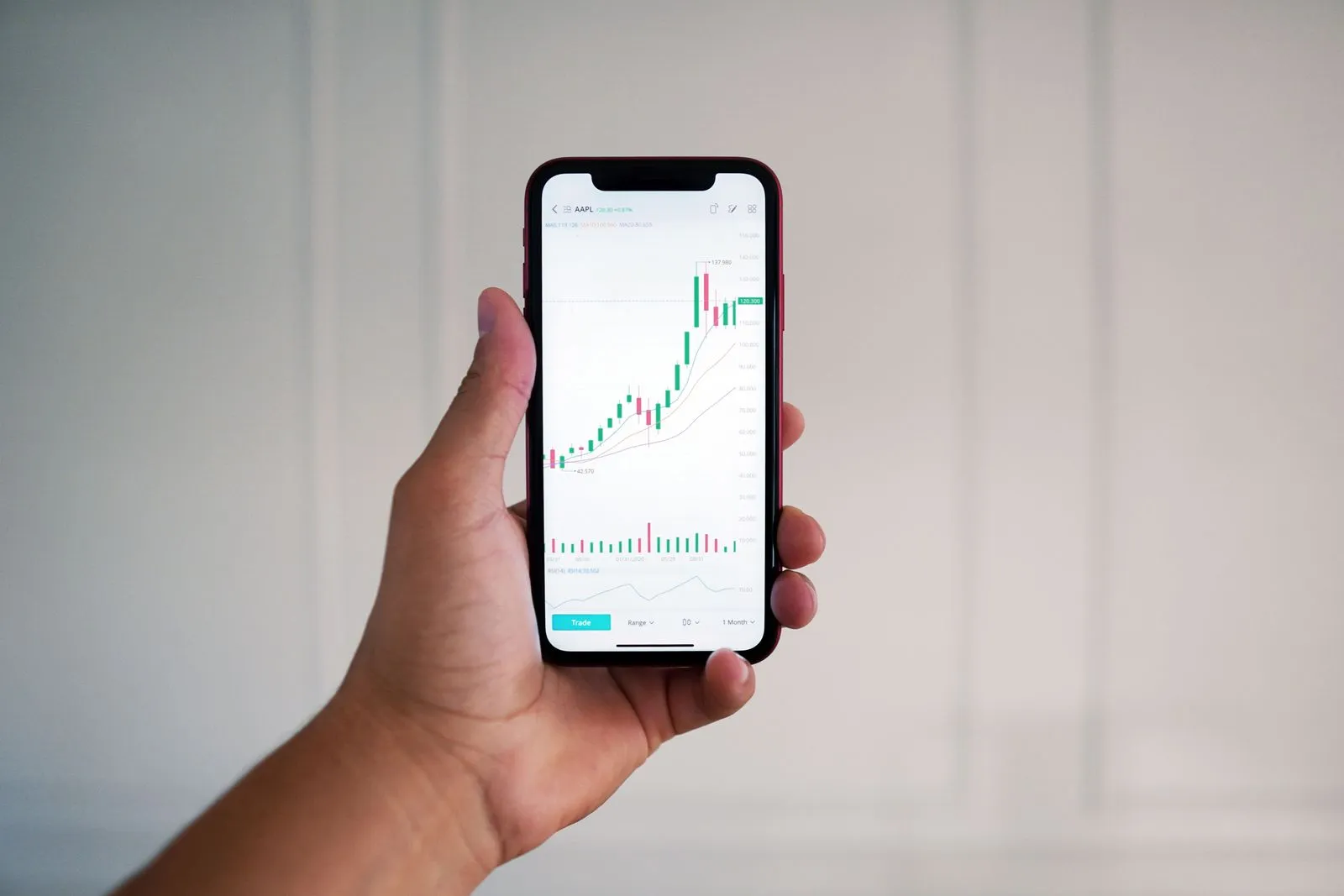
The FBI's 2025 Internet Crime Report names cryptocurrency investment fraud as the biggest source of reported losses in 2025, at $7.2 billion. Contact often starts through text messages, social media, ads or dating apps and quickly moves to a messaging platform. Victims are steered to fake investment platforms that show fake profits and even offer loans to invest more. When they try to withdraw, they're hit with "taxes and fees" until the scammers disappear.
In our view, one rule covers every version of this: someone who courts you and then pushes you to invest isn't a financial advisor, however real the feelings seem. Before you move any money, check the platform independently and talk to someone you trust.
Are romance scams common? What the FTC and FBI numbers show
Yes, and social media plays a big part. According to an FTC Data Spotlight, nearly 60% of people who reported losing money to a romance scam in 2025 said it started on a social media platform. Romance scams that began on social media accounted for $298 million in reported losses that year. Reports describe scammers tailoring their pitch to people's profiles, then inventing a crisis or casually offering investment advice.
The FBI's Internet Crime Report counted 23,159 complaints in its confidence/romance category in 2025, up from 17,910 in 2024, with about $929 million in reported losses. That category also includes grandparent scams. These figures only count people who realized what happened and filed a report, so in our view the real number is higher. How easily victims miss it shows in the investment variant: when the FBI contacted 3,780 crypto investment fraud victims through its Operation Level Up in 2025, 78% didn't know they were being scammed.
Why smart people keep paying, and why it isn't your fault
From the outside, it can look baffling that someone keeps sending money. By the time the first request arrives, though, the relationship feels real and the trust is deep. Each new request comes with a new, urgent story, and saying no feels like abandoning someone you love.
In our view, two mechanisms keep people paying. The first is the sunk cost: after investing so much money and emotion, admitting it was all fake feels unbearable, and each new payment promises to make the earlier ones worthwhile. Shame is the second. Scammers count on victims staying quiet out of fear of being judged, and the FTC warns that they may try to isolate people by insisting on their silence.
None of this is a character flaw. Someone worked from a practiced script to deceive you, and as the FBI's crypto fraud outreach shows, many victims don't realize they're being scammed. The sooner you talk to someone you trust, the sooner the losses stop.
How to check whether your online match is real
You can't verify love, but you can check an identity for contradictions. These steps build on the FTC's romance scam advice, plus our own take on photos and video:
- Search their story: Look up the job they claim plus the word "scammer," for example "oil rig scammer" or "US Army scammer." See if others describe the same story.
- Reverse image search their photos: If the pictures show up under other names or in older posts, they're probably stolen. Here's how to reverse image search on a phone or computer.
- Consider AI-generated photos: No matches can also mean the image was created by AI. Our guide on how to tell if an image is AI-generated shows what to look for.
- Ask for a live video call: If someone always has a broken camera or a bad connection, be suspicious.
- Talk to someone you trust: Ask friends or family whether they're concerned about your new love interest.
There's a catch with photos and video, though. Asking for a photo holding a note with your name and today's date used to be a decent test, but current image generators can render legible text on a note too, so it no longer proves anything. Even live video can be faked, since some tools swap faces in real time. Our guide on how to spot a deepfake covers the warning signs.
A video call is still worth asking for, just not as the final word, so combine it with the other checks. And the most important test is the simplest: if someone you've never met asks for money, treat it as a scam.
A fresh photo with a check code: what it can and can't show
The core problem with online dating is that any profile picture can come from anywhere. At TrustCamera we're working on an approach that starts right there. Photos and videos are captured directly in the app, and uploads from the gallery aren't possible, so a stolen photo from the internet can't simply be uploaded to get a check code.
In practice, you'd ask your match to take a fresh photo in the TrustCamera app and send you the check code right away. You then check it for free in your browser, without an account. It shows that the file hasn't changed since capture, plus the capture time and the approximate location, accurate to about 10 km (roughly 6 miles), never the exact spot. If the approximate location doesn't fit at all with where the person says they are, that's a contradiction worth taking seriously.
The limits matter just as much. A location that fits isn't proof of anything. A check code doesn't show who is in the photo or prove that the person actually runs the profile. It can't tell whether a scene was staged either, so a live video call and the other checks stay important. And if someone can't or won't send a code, that alone doesn't prove anything, especially since the app for Android and iOS is only coming soon.
Think about your own privacy too. If you send a code to a stranger, it reveals roughly where you took the photo. Consider that before you share one. And no photo replaces the basic rule: no money for someone you've never met.
What to do if you already paid a romance scammer
If you've sent money, act fast. The FTC's guide on what to do if you were scammed says your money might already be gone, but it's always worth asking the company you used whether there's a way to get it back. Take these steps:
- Stop paying: Don't send more money, cash any checks or forward packages, however urgent the next message sounds.
- Contact the payment company right away: Call your bank, card issuer, payment app, wire transfer company, gift card issuer or crypto exchange. Tell them a scammer tricked you and ask them to reverse the payment.
- Save the evidence: Keep messages, profile pages, usernames, phone numbers and every transaction detail. For gift cards, keep the card and the receipt.
- Report the profile: Notify the dating app or social network where you met.
- Report a romance scam to the authorities: File at ReportFraud.ftc.gov and with the FBI's Internet Crime Complaint Center at ic3.gov.
- Cut contact: Block the person once you've saved everything.
Cryptocurrency payments don't have the same legal protections as credit and debit cards, the FTC notes, so they're especially hard to recover. Our guide on what to do if you got scammed on Facebook Marketplace goes deeper on bank transfers, Zelle, wire transfers, payment apps and cards, and those steps work the same way after a romance scam.
If no money changed hands but someone lied about who they are, read what to do if you get catfished. If someone threatens to share intimate images, our guide on sextortion explains what to do.
Can you get money back from a romance scam? Beware of recovery scams
Sometimes, if you act quickly and the payment method allows it. But after a romance scam, the next scammer may already be on the way. The FTC warns about refund and recovery scams that target people who have already lost money. Scammers buy and trade lists of past victims, then get in touch posing as a government agency, a law firm or a consumer group that can recover your money for a fee.
The FTC is clear: government agencies and legitimate organizations will never ask for money to help you get a refund, and they won't guarantee you'll get it back. Never pay upfront, and never hand over your bank details or Social Security number to someone who contacted you out of the blue. If you want help, reach out yourself to an organization you've looked up independently.
How to talk to a parent or friend caught in a romance scam
Maybe it isn't you but your mom, a friend or a neighbor who's in a relationship that worries you. In our view, a calm conversation works better than a confrontation. Someone in love tends to defend the relationship, especially against accusations. These steps can help:
- Listen before you judge: Ask how they met and what the person is like, and skip lines like "How could you fall for that?"
- Check together: Offer to run a reverse image search of the photos with them. Finding the pictures under another name often convinces more than any argument.
- Be clear about money: Ask them to pause any payments until you've looked into the story together.
- Offer help, don't force it: Offer to go with them to the bank or to file a report.
If the person is 60 or older, the Justice Department's National Elder Fraud Hotline at 833-FRAUD-11 (833-372-8311) can help. It's free and staffed by case managers, Monday to Friday, 10 a.m. to 6 p.m. Eastern, in English, Spanish and other languages. You can call on behalf of someone you know. Scammers impersonate the hotline too, so always dial the number yourself.

Frequently asked questions about romance scams
Are romance scams common?
Yes. The FBI alone logged more than 20,000 confidence and romance fraud complaints in 2025, and the FTC collects its own reports on top of that. According to the FTC, most people who reported losing money to a romance scam in 2025 said it started on social media. Not every victim reports it, so the real number is likely higher.
Is romance scamming illegal?
It can be. Lying to someone to get their money can be a crime, and the FBI tracks confidence and romance fraud as a crime type in its annual Internet Crime Report. Federal prosecutors have charged romance scammers with crimes such as wire fraud and money laundering. Whether a case leads to charges is up to law enforcement, so for legal questions, talk to a lawyer or your state attorney general's office.
Can romance scammers video call you?
Yes, it's possible. Some tools can swap faces in real time, so a video call is no longer solid proof on its own. Still, a match who always has an excuse not to video chat is a red flag. Treat a video call as one check among several, together with a reverse image search, a search of their story and the rule never to send money to someone you haven't met.
Can you get money back from a romance scam?
Sometimes. Contact your bank, card issuer, payment app, wire service or gift card issuer immediately and ask them to reverse the payment. The FTC notes that crypto payments lack the legal protections of credit and debit cards, so they're especially hard to recover. Don't pay anyone who offers to recover your money for a fee, because that's a recovery scam.
How do I report a romance scam?
Report it to the FTC at ReportFraud.ftc.gov and to the FBI's Internet Crime Complaint Center at ic3.gov. Include names, usernames, phone numbers and the details of every payment. Also report the profile to the dating app or social network where you met, so it doesn't reach other people.
How long do romance scams last?
It varies, but they often run for weeks or months. The FTC says romance scammers play the long game, building a relationship over time before the conversation turns to money. Once someone has paid, new requests tend to follow, each with a fresh reason. That's why stopping payments early matters so much.
Where can romance scam victims get help?
Start with your bank and a report to the FTC and the FBI's IC3. If you or the person affected is 60 or older, the National Elder Fraud Hotline at 833-372-8311 connects you with a case manager. If the situation feels overwhelming or you're thinking about suicide, call or text 988, the free and confidential Suicide & Crisis Lifeline, available 24/7. In an emergency, call 911.
Conclusion: spot a romance scam by the money, not the feelings
The feelings in a romance scam are designed to feel real, and that's what makes it work. So don't rely on your gut. Rely on one rule: no money, gift cards or crypto for anyone you've never met in person. Reverse image searches, a search of their story and a video call help you find contradictions, but they don't replace that rule.
If it already happened, cut contact, call your bank or payment app, save the evidence and report it to the FTC and the FBI. Ignore anyone who offers to recover your money for a fee. And above all, you have nothing to be ashamed of. Help is available from your bank, the authorities and the people who care about you.
About the author

Co-founder & Marketing at TrustCamera
Yannick is a co-founder of TrustCamera and leads marketing and content. He holds a bachelor's and a master's degree in business and has worked in content marketing and SEO for years.